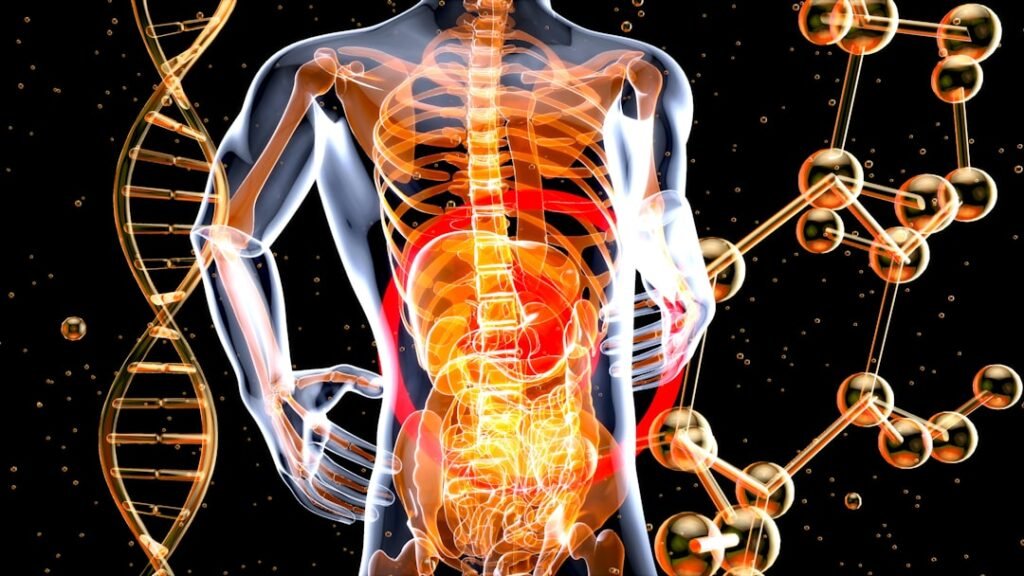
If you have been struggling with chronic, severe bloating that makes you look six months pregnant by the end of the day, you are not alone. Recent research indicates that up to 60% to 80% of IBS cases are actually caused by a highly specific, treatable condition known as SIBO: Small Intestinal Bacterial Overgrowth.
What Exactly is SIBO? An Anatomy Lesson
Your intestines are divided into two distinct sections:
The Large Intestine
The bustling metropolis of your gut microbiome. Designed to hold trillions of bacteria that ferment leftover fibres and produce vitamins.
The Small Intestine
Where digestion and nutrient absorption happens. Should be relatively clean and sterile with only a small, controlled population of bacteria.
SIBO occurs when bacteria from the large intestine migrate upward and colonise the small intestine. You essentially have the right bugs, but they are living in the wrong neighbourhood.
The Three Types of SIBO Gases
Hydrogen-Dominant SIBO
Bacteria produce hydrogen gas. Hydrogen draws excess water into the intestines, typically leading to rapid transit time and chronic diarrhoea.
Methane-Dominant SIBO (IMO)
Archaea produce methane gas. Methane is a paralytic gas that physically paralyses the smooth muscles of the digestive tract, leading to severe, stubborn constipation.
Hydrogen Sulfide SIBO
Bacteria produce hydrogen sulfide gas. Characterised by highly foul-smelling gas (like rotten eggs), brain fog, and alternating diarrhoea and constipation.
Common Symptoms
Digestive Symptoms
- Severe, painful bloating
- Excessive belching and flatulence
- Abdominal cramping
- Chronic diarrhoea or constipation
- Acid reflux and nausea
Systemic Symptoms
- Vitamin B12 deficiency
- Iron deficiency anaemia
- Fat malabsorption (greasy stools)
- Leaky gut & brain fog
- Joint pain and skin rashes
The Root Causes of SIBO
SIBO is rarely a primary condition; it is almost always a secondary consequence of an underlying biological failure:
1. A Broken “Sweeper” (Migrating Motor Complex Failure)
The MMC is your gut’s internal street sweeper. Food poisoning toxins can permanently damage the nerves that control the MMC. When the sweeper stops working, bacteria accumulate.
2. Low Stomach Acid (Hypochlorhydria)
Stomach acid kills most bacteria before they reach the small intestine. Low acid, due to stress, aging, or PPI medications, allows bacteria to survive and colonise.
3. Structural Blockages and Adhesions
Previous surgeries or endometriosis can create scar tissue that wraps around the small intestine, creating areas where food and bacteria can get trapped.
4. Ileocecal Valve Dysfunction
The biological doorway that separates the small and large intestines. If stuck open, colonic bacteria can migrate upwards.
The Treatment Protocol: Eradicate, Repair, and Restore
Phase I: Eradication
Kill the overgrown bacteria using:
- Pharmaceutical Antibiotics: Rifaximin (gold standard)
- Herbal Antimicrobials: Oregano oil, berberine, neem, allicin
Phase II: Starving the Bugs (Diet)
Stop feeding the bacteria with fermentable carbohydrates. The Low FODMAP Diet or Bi-Phasic Diet temporarily eliminates highly fermentable foods to starve the bacteria and reduce gas production.
Phase III: Restoring Motility (The Prokinetic)
Get the “sweeper” working again with prokinetic medications or supplements that stimulate the Migrating Motor Complex.
How Colonics Can Help SIBO
While a colonic does not directly flush out the small intestine, it can be a powerful complementary therapy:
1. Relieving Downstream Pressure
When the colon is backed up, it creates pressure that forces the ileocecal valve open, allowing colonic bacteria to wash backward. Clearing the colon relieves this pressure.
2. Managing “Die-Off” Symptoms
When bacteria die during treatment, they release toxic endotoxins. Colon hydrotherapy flushes these dead bacteria out, significantly reducing die-off symptoms.
3. Stimulating Peristalsis
The warm water and abdominal massage stimulate the smooth muscle of the bowel, helping retrain a sluggish digestive tract to move waste efficiently.
Works Cited and Further Reading
- American College of Gastroenterology: ACG Clinical Guideline on SIBO
- NIH: Small Intestinal Bacterial Overgrowth: A Comprehensive Review
- Mayo Clinic: Small intestinal bacterial overgrowth (SIBO)
- Global Advances in Health and Medicine: Herbal Therapy for SIBO
- Association of Registered Colonic Hydrotherapists (ARCH)
Struggling with SIBO Symptoms?
Get professional support and guidance on your SIBO journey